
НОВІ РІШЕННЯ ДЛЯ ЧИСТОЇ ЕНЕРГЕТИКИ / NEW SOLUTIONS FOR CLEAN ENERGY
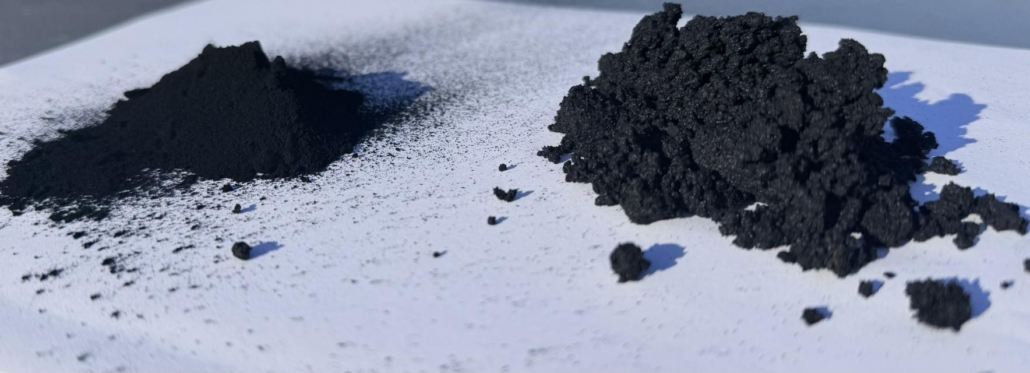
У рамках Меморандуму про науково-технічне співробітництво з ТОВ «А-ПАУЕР» Науково-дослідний гірничорудний інститут – НДГРІ КНУ завершив НДР з однієї з актуальних проблем промислової екології – гранулювання порошкоподібного технічного вуглецю як альтернативного палива (Свідоцтво ТП №492).
Технічний вуглець у порошкоподібному стані – це тонкодисперсний порошок із розміром частинок від 10 до 500 нм. Його використання у якості палива, як і інших подібних, пов’язане з цілим комплексом ризиків: в екологічному плані частинки PM2.5 проникають у легені та забруднюють ґрунт і водойми на десятки років; у технологічному – пилові хмари вибухонебезпечні, а транспортування й подача порошку супроводжуються неконтрольованими втратами матеріалу; в економічному – значна частина палива просто втрачається ще до моменту спалювання.
Вченими НДГРІ розроблено технологію гранулювання із застосуванням природних сполук. На відміну від традиційних зв’язувальних агентів, наше рішення: усуває пилоутворення та викиди PM2.5 на всіх етапах логістики; не знижує теплотворну здатність палива; забезпечує стабільну подачу в котлоагрегат і підвищення ККД до 15–18%; сумісне з діючим обладнанням ТЕС без реконструкції.
Це черговий крок НДГРІ у напрямку зеленої трансформації гірничо-промислового комплексу та розвитку ринку альтернативних палив в Україні.
________
As part of the Memorandum on Scientific and Technical Cooperation with LLC “A-POWER”, the Scientific Research Mining Institute — SRMI of Kryvyi Rih National University has completed an R&D project addressing one of the most pressing challenges in industrial ecology: the granulation of powdered carbon black as an alternative fuel (Certificate TP No. 492).
Carbon black in powdered form is an ultra-fine powder with particle sizes ranging from 10 to 500 nm. Its use as a fuel, like that of similar materials, entails a broad range of risks: from an environmental standpoint, PM2.5 particles penetrate the lungs and contaminate soil and water bodies for decades; from a technological perspective, dust clouds pose explosion hazards, whilst the transportation and feeding of the powder result in uncontrolled material losses; and from an economic viewpoint, a significant proportion of the fuel is simply lost before combustion even begins.
Scientists at the SRMI have developed a granulation technology utilising natural compounds. Unlike conventional binding agents, our solution: eliminates dust generation and PM2.5 emissions at every stage of logistics; does not reduce the calorific value of the fuel; ensures stable feed into the boiler unit and increases thermal efficiency by up to 15–18%; and is compatible with existing thermal power plant equipment without the need for retrofitting.
This represents another step by the SRMI towards the green transformation of the mining and industrial sector and the development of the alternative fuels market in Ukraine.


Leave a Reply
Want to join the discussion?Feel free to contribute!